
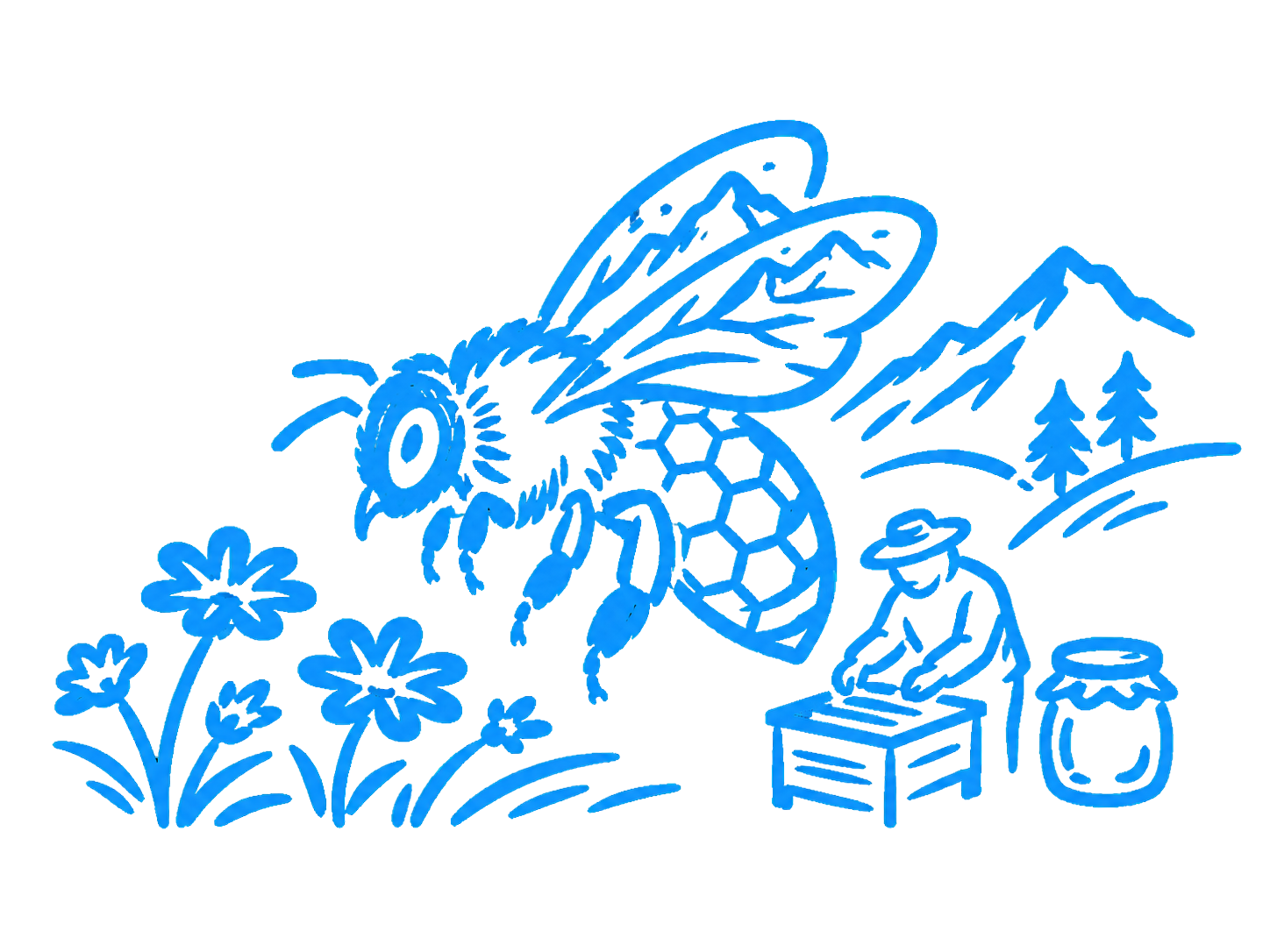
When I first travelled to Xiaohegou in February 2025, I thought I understood conservation. Xiaohegou is a mountainous nature reserve in Pingwu County, Sichuan, a region known for its forests, biodiversity, and giant panda habitat. I had gone there as part of a field study examining how different approaches to conservation worked in practice. Above all, I went because I loved animals. I wanted to see wildlife, walk through protected forests, and understand how government policy and community participation could preserve a landscape shared by people and other species. In my mind, conservation felt clear and almost idealistic: protect the animals, protect the forest, and everything else would follow.
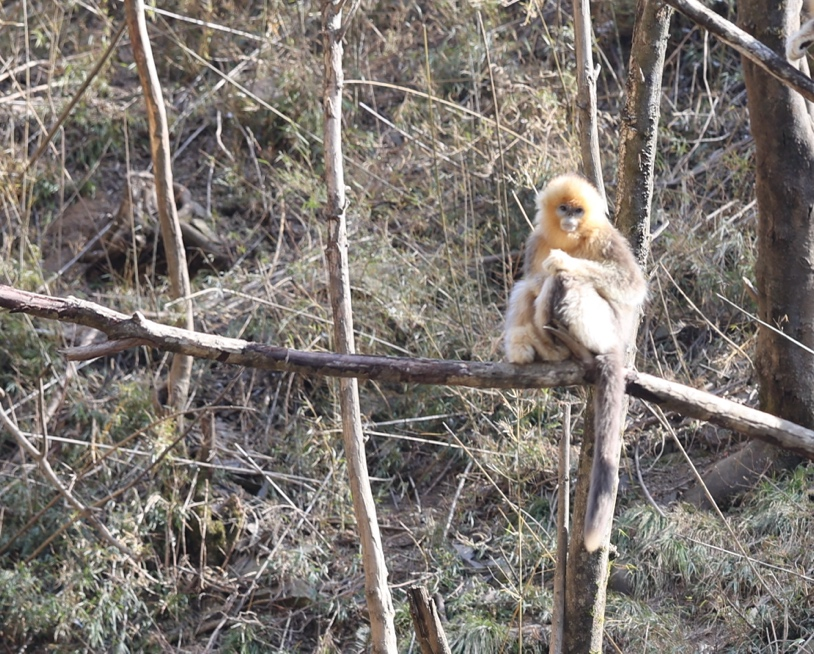
But that clarity did not last long.
As I spent more time there, I began to notice something I had not expected to see. Conservation, while necessary, was not simply a neutral intervention. It reshaped the lives of the people who had lived in these mountains for generations. Hunting and logging were no longer allowed, access to certain resources became restricted, and traditional ways of making a living might gradually disappear. What I had once seen as a purely ecological effort revealed itself to be something more complicated, a system where government efforts at environmental protection and human livelihood were constantly negotiating with each other.
Some of the people I met were elderly villagers who had stayed, while younger generations had gradually left in search of more stable income. Others were trying to adapt, but without clear support or access to modern markets, which was difficult. What struck me most was that conservation, which I had imagined as an unquestioned good, carried uneven consequences. It protected animals and ecosystems, but it also quietly shifted economic pressure onto local communities.
That was when the idea of balance first began to take shape for me.
I left Xiaohegou that year with a sense that my understanding had been incomplete. Loving animals was not enough. If conservation only protects wildlife while overlooking the people who live alongside it, then it risks becoming unsustainable, or even unjust. I began to think more seriously about environmental justice: who bears the cost of conservation, and how that cost might be shared more fairly.
That is why I chose to return.
I returned in February 2026, almost exactly a year after my first visit. This time, however, I did not choose honey before I arrived. Honey seemed to choose itself. Walking through Longchi Village, a nearby community connected to Xiaohegou Provincial Nature Reserve through local conservation efforts, I began to notice beehives everywhere: some placed near houses, some arranged along slopes, some almost blending into the mountain background. At the township office, promotional signs described local honey as a promising ecological product. In small shops, I saw jars and simple containers of honey being sold without the polished packaging I was used to seeing in Shanghai. These details were quiet, but they kept appearing. Gradually, they turned honey from a product into a question.
I learned that beekeeping was not a new invention designed for tourism. It was part of local life. In the past, villagers had traditions of herding sheep and keeping bees, and honey was often used as a gift when visiting relatives or friends. It carried not only economic value, but also social and cultural meaning. At the same time, it seemed to fit naturally with conservation. Bees rely on a healthy ecosystem; they pollinate plants, support biodiversity, and do not extract resources in the same way as logging or hunting. There is something almost poetic about it: the same forest that is protected for wildlife can also sustain human livelihood through the quiet work of bees.
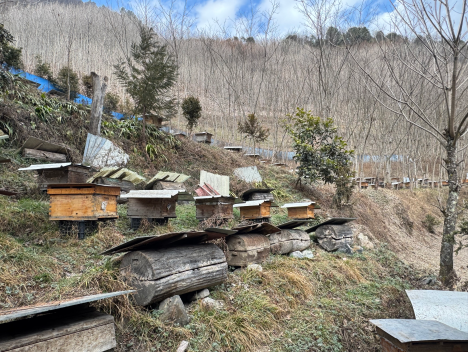
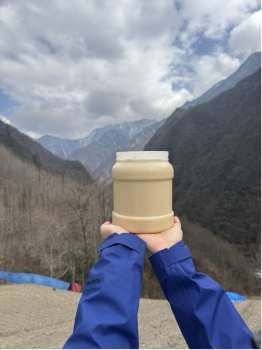
Figure 2 A, Beehives kept by local people on mountain slopes in Xiaohegou. B, Honey harvested from those very hives.
And yet, as I listened more closely, I realized that even this seemingly harmonious model was fragile.
Part of that fragility came from nature itself. The quality of the honey is exceptional, shaped by the high altitude and the diversity of medicinal plants in the region. Unlike industrial honey produced from single crops, this is a complex “hundred-flower” honey, reflecting the richness of the mountain ecosystem. But that very dependence on nature also makes it vulnerable. Weather fluctuations, floods, and seasonal instability can all affect nectar production. In difficult years, beekeepers may struggle to maintain their colonies at all.
Another part of the fragility came from the way beekeeping had changed. Older villagers told me about the traditional bangbangcao hives, which were often placed in cliff walls or stone crevices. They required less frequent management and were usually harvested only once a year, but their yield was low. Later, in order to support poverty alleviation and improve income, the government encouraged beekeeping more actively. Grid-box hives became more common because they could be managed on flatter ground, checked more often, and produce higher yields. At one point, around sixty to seventy percent of households, about 138 families, were involved. Beekeeping became one of the few livelihoods that seemed able to grow without directly damaging the forest.
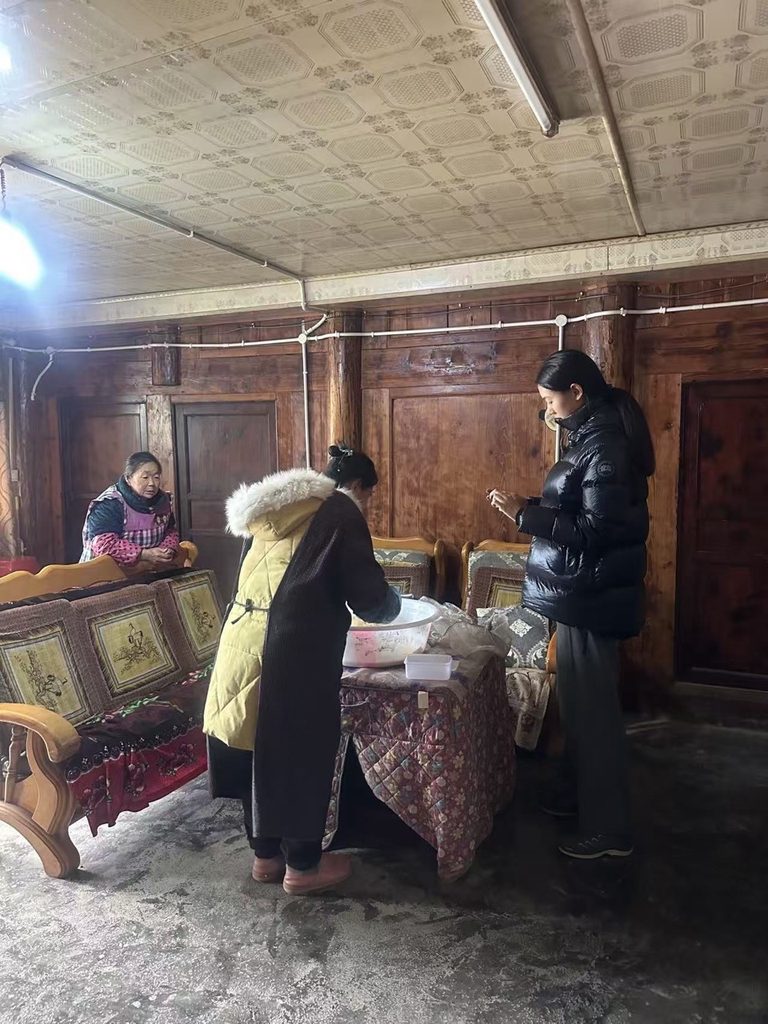
For a while, that model worked. Large buyers and factories helped test honey quality and provided relatively stable purchasing channels. Villagers could focus on producing honey, while other parts of the system helped turn it into income. But after the pandemic and the broader economic downturn, many of those channels weakened or disappeared. Some households were left with several tons of honey stored at home, unable to sell it. What had once seemed like an ecological solution suddenly exposed another dependence: producing something valuable is not the same as being able to sell it.
There are also challenges that have little to do with nature, but everything to do with systems. Villagers often sell honey through WeChat, personal networks, or the occasional tourist. Most of the people engaged in beekeeping are older and unfamiliar with newer forms of marketing such as livestreaming, e-commerce, or digital branding. The problem is no longer just how to produce good honey. It is how to prove its quality, how to reach consumers, and how to translate ecological value into economic value.
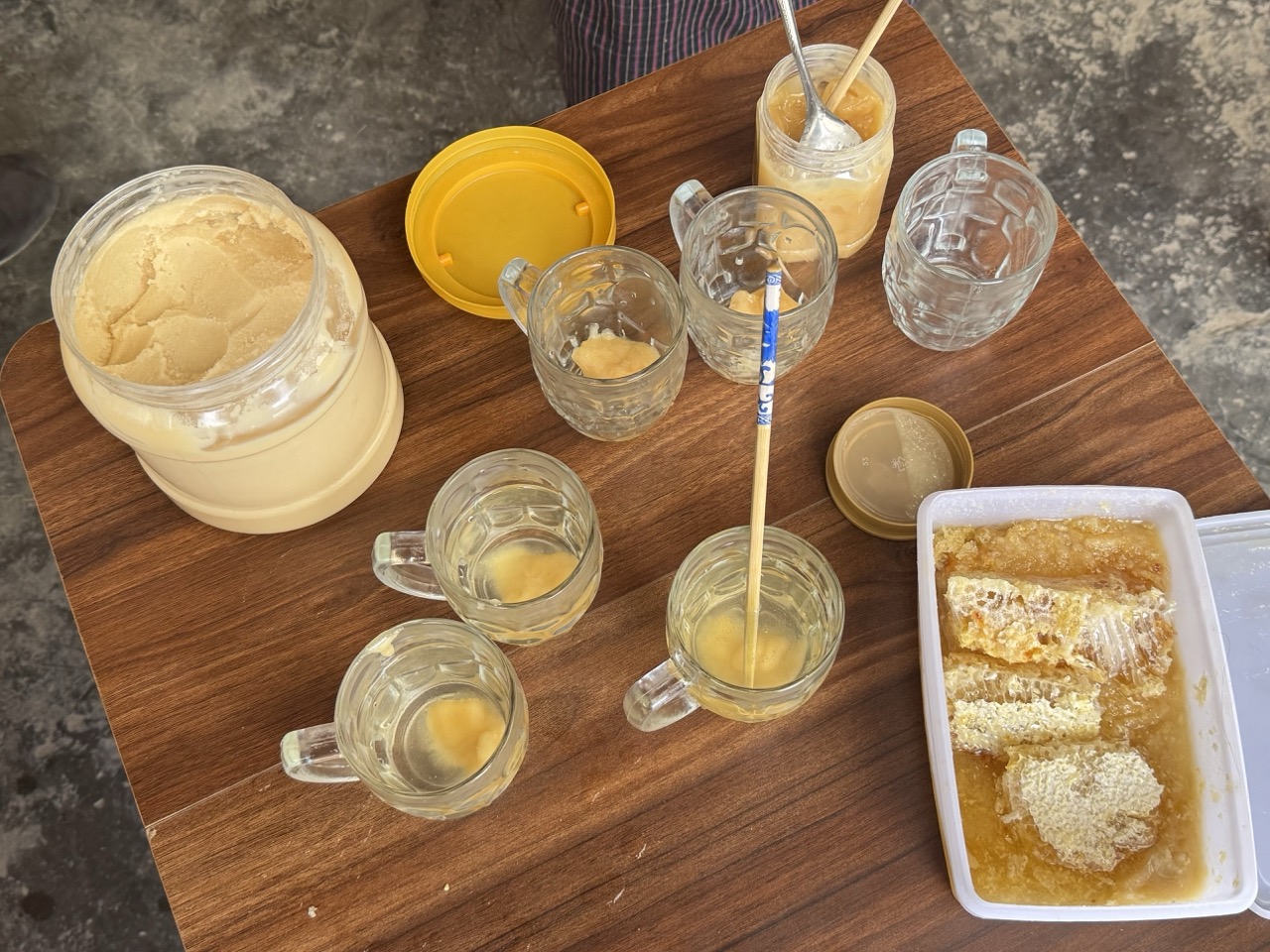
Standing there, I found myself thinking about how different this felt from life in Shanghai. In the city, products appear finished, packaged, and disconnected from their origins. But here, honey was inseparable from everything that produced it: the weather, the flowers, the mountains, the bees, and the people caring for them. It made the idea of interdependence impossible to ignore. Nothing existed in isolation.
And slowly, my understanding of conservation shifted again.
It is not simply about protecting animals, nor is it only about sustaining human livelihoods. It is about negotiating a space where both can exist together, even when that balance is difficult and constantly changing. It is about recognizing that ecological and social systems are intertwined, and that protecting one while neglecting the other will ultimately weaken both. In that sense, honey became a way of thinking about what conservation could look like when it includes people rather than excludes them.
With that understanding, I wanted my own contribution to be small but concrete. I began thinking about how I could help improve the honey’s packaging and organize a simple marketing plan: a label that explained where the honey came from, a clearer visual identity, and a story that connected consumers not only to the sweetness of the product, but also to the flowers, the bees, and the people behind it. Compared with the scale of the problem, this was a tiny intervention. Still, it felt like a way to make coexistence more tangible, to help build a bridge between local producers and people who might never visit Xiaohegou themselves.
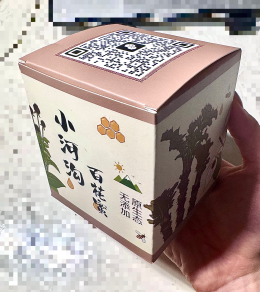
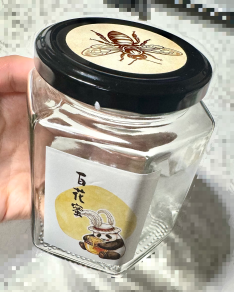
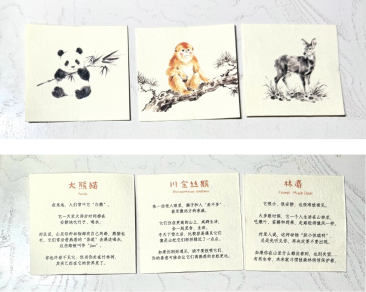
Figure 5 A, Outer packaging. B, Stickers and chosen jar shape. C, Small informative cards that go with each jar.
But even that small action was not as simple as I first imagined. Once honey is packaged and pushed toward a wider market, it enters a new world of expectations and responsibilities. Consumers will want proof of quality. Food safety standards, testing procedures, labels, and compliance suddenly become unavoidable. In the past, when larger buyers or companies were involved, villagers did not have to carry all of those responsibilities alone. In a new sales model, however, those pressures may fall directly onto them. I began to realize that my attempt to help could also create new burdens. A better package might attract attention, but it could also expose the absence of a supporting system.
That realization was uncomfortable, but important. I had returned to Xiaohegou hoping to support a livelihood that seemed to connect people and nature beautifully. I still believe honey has that potential. Yet I also learned that coexistence cannot be achieved by a single attractive product, a single design, or a single student project. It requires infrastructure, trust, testing, market access, policy support, and long-term local participation. My role was not to arrive with a solution, but to understand more honestly where the edges of my own action were.
I do not think I returned to Xiaohegou with an answer. What I brought instead was a different kind of awareness, and perhaps a willingness to engage with complexity rather than simplify it. If there is a future for places like this, it will not come from one policy or one industry. It will come from small, ongoing efforts to build connections: between producers and consumers, between ecology and economy, between protection and participation. It will also require the humility to recognize that even well-intentioned help can create new problems.
And maybe that is what stayed with me the most.
In 2025, I came to Xiaohegou believing that conservation was about saving animals. This time, I left understanding that it is also about people. More importantly, I learned that caring about both does not make the work simpler. It makes it more difficult, more fragile, and more honest. The real challenge lies not in imagining a perfect balance, but in continuing to search for a healthier one in a world of interdependence.